The Art of Balancing Clean Air and Throughput: Choosing a Laser Engraver Fume Extractor
Introduction — a practical question for every maker
Have you ever stopped mid-run because the room smelled like burning plastic and wondered if you were doing more harm than good? Many of us have faced that scenario: a busy production day, laser cutters humming, and an uneasy cloud of odors and particles gathering near the workbench. A laser engraver fume extractor is supposed to fix that, yet outcomes vary widely depending on system choice and setup (I’ve seen workshop owners throw out expensive filters because they picked the wrong unit).
Measured data from small-scale setups often shows spikes in VOCs and PM2.5 during engraving cycles—these spikes matter not just for comfort but for health and long-term equipment reliability. So the question becomes: how do you pick a fume extractor that keeps throughput high without compromising air quality or wallet? I’ll walk you through practical trade-offs, common mistakes, and realistic expectations for operations of any size. Let’s dig into what usually goes wrong and what to watch for next.
Part 2 — The deeper problems with traditional solutions
Why do standard approaches fail?
I want to start this section with a clear link to the workhorse systems most shops default to: plastic fume extraction. In theory, a basic inline fan plus a filter should capture smoke and odors. In practice, that setup often misses three crucial layers: correct capture velocity at the source, proper filtration stages (HEPA, activated carbon), and balanced airflow to avoid backpressure that weakens capture. Technically speaking, many standard units ignore variable flow control and lack a VOC sensor to ramp filtration during peaks. I’ve watched cabinets with undersized axial fans struggle to capture fumes from deep engravings—so they recirculate contaminants instead of removing them.
Look, it’s simpler than you think: capture is a local problem. If the hood or nozzle isn’t placed close enough, the extractor does more mixing than extraction. Filters get clogged quickly when the system lacks pre-filters or a good particulate management plan. That raises maintenance costs and downtime—two things that kill throughput. From a component standpoint, poor blower motor selection and inadequate activated carbon bed sizing lead to fast saturation and poor odor control. We’ve also seen poorly specified power converters and weak seals cause leaks and inconsistent performance—so check those details early. — and yes, that matters for long-term reliability.
Part 3 — New principles for better performance
What’s next: smarter systems and practical rules
Moving forward, the best designs apply a few clear principles. First: source capture, always. A focused hood or nozzle with targeted capture velocity beats oversized ducts that attempt to suck from across the room. Second: staged filtration. Combining a washable pre-filter, a HEPA stage for particulates, and an activated carbon stage for VOCs reduces load on each element and extends life. Third: active sensing. Systems that include VOC sensors and differential pressure gauges can modulate fan speed and alert you when maintenance is due. I like to think in terms of modular blocks—fan, sensor, filter bank—so you can upgrade parts without replacing the whole machine. And yes, that makes ownership simpler and cheaper over time — funny how that works, right?
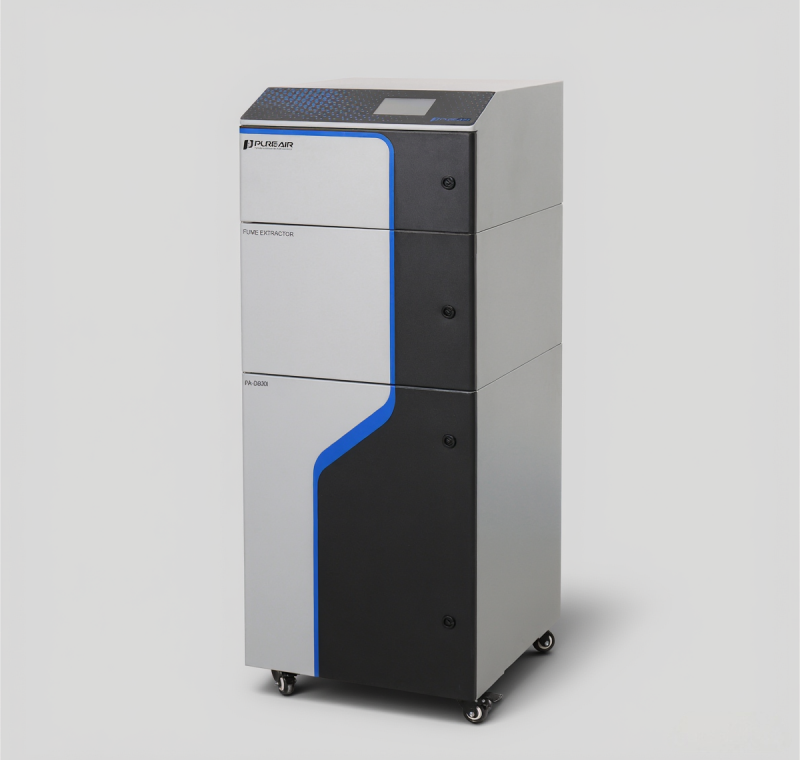
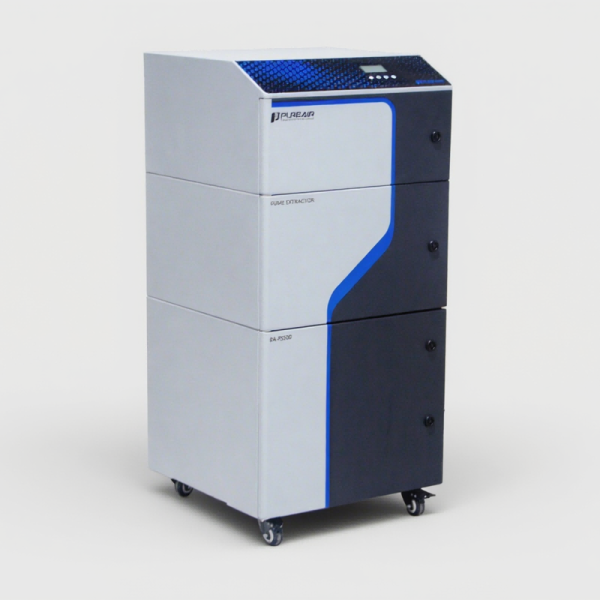 To be concrete: consider integrating a variable-speed axial fan, a VOC sensor tied to a controller, and a filter stack sized for your maximum duty cycle. For smaller operations, a compact plastic fume extraction unit with replaceable cartridges and a clear maintenance schedule is often the most cost-effective path. For larger, continuous operations, invest in redundant filter banks, monitoring dashboards, and easy-to-service housings so you avoid unplanned stops. I’ve guided teams that reduced filter spend and improved air quality just by rethinking capture geometry and adding a simple VOC interlock.
Before you decide, weigh three practical metrics: capture efficiency at the source (measure or estimate face velocity), total clean air delivery rate (CADR) in cubic feet per minute or cubic meters per hour, and lifecycle cost (filter replacement cadence plus power draw). Use these to compare units on specs rather than marketing claims. If you want an actionable starting point, test a candidate at full load for several hours and log VOC and PM2.5 trends—real numbers beat promises every time.
Finally, when you’re ready to move from planning to purchase, consider vendors who provide detailed filtration specs and service support. I recommend starting with proven systems and then tailoring—don’t over-engineer from day one. For trustworthy equipment and guidance, check offerings from PURE-AIR. We’ve found that sensible choices and modest upgrades deliver the best mix of clean air and steady throughput.